Squashing Confusion!
Part 1: What's What.

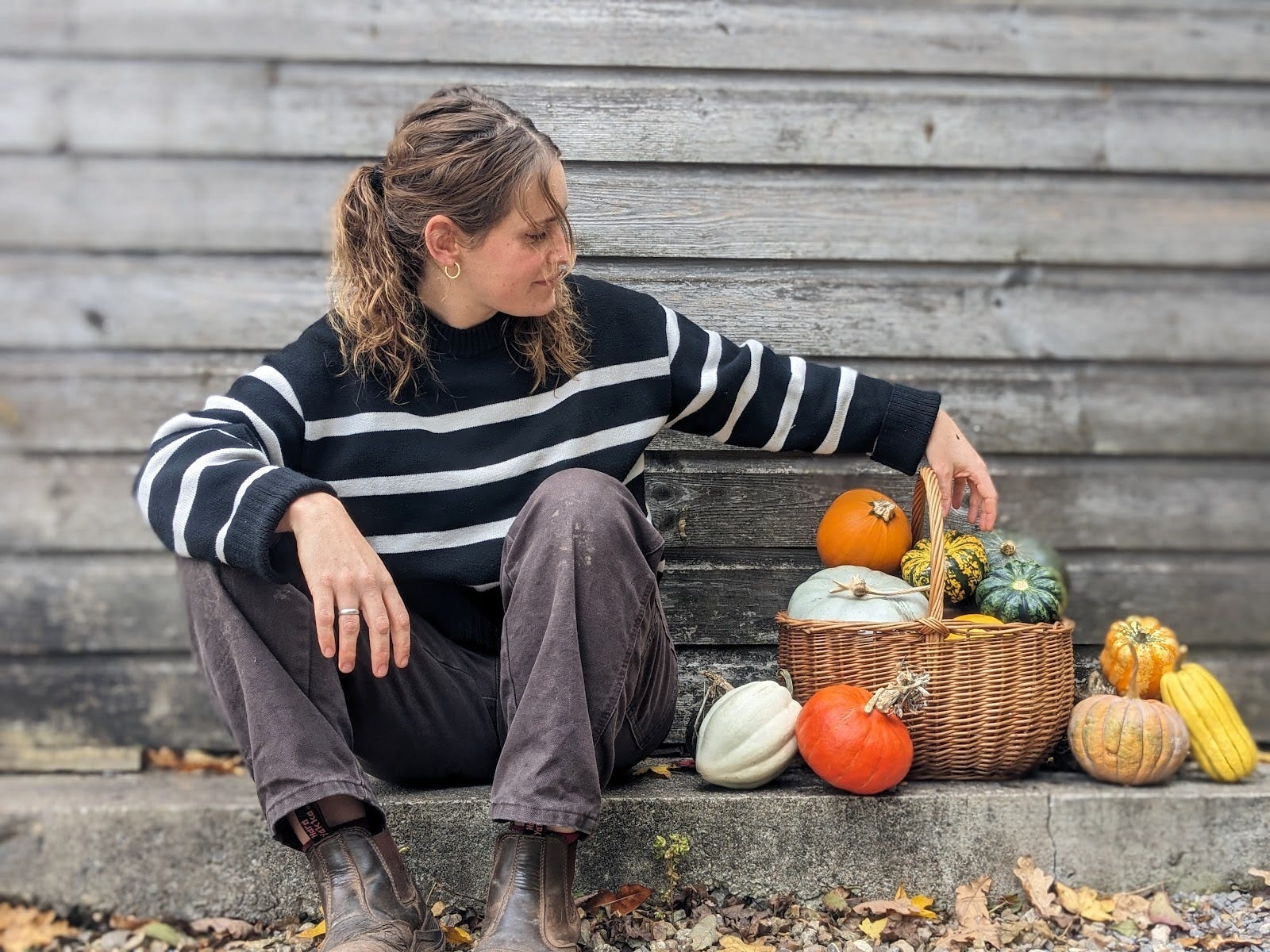
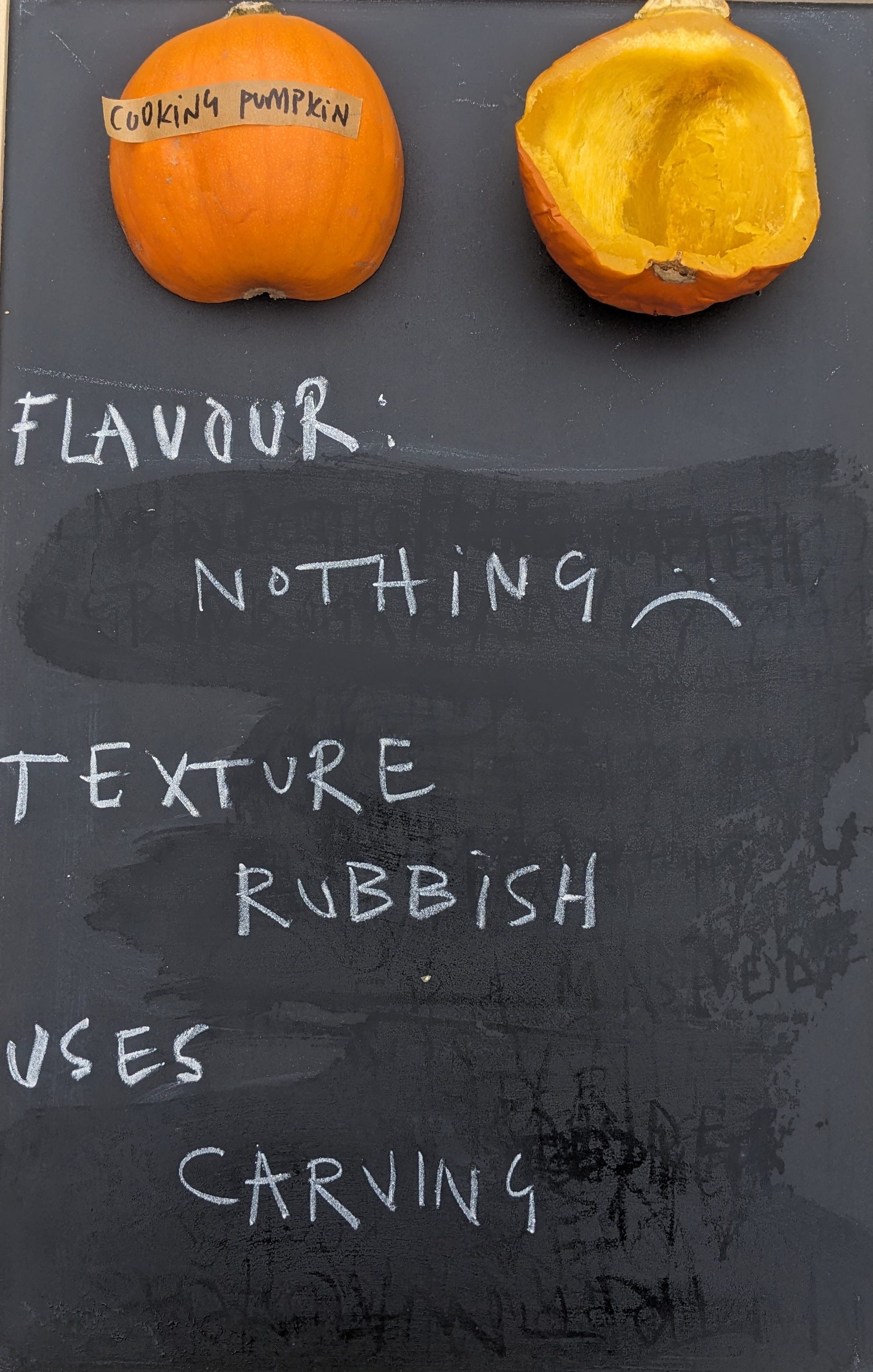
Don’t like pumpkin? Fair enough. That’s because most of the big orange ones are grown for decoration and taste like greywater. Luckily for us, there’s so much to be enjoyed in the squash family beyond the halloween pumpkin- so here’s the beginnings of a mini-series on winter squash that’ll hopefully inspire more than just that annual, utilitarian pumpkin soup made from a saggy jack-o-lantern!
Supermarkets really love to oversimplify squash- and given that’s where over 75% of Brits are buying fruit and veg, it’s really no surprise that most of us don’t know a Kuri from a Futsu. In every supermarket I visited it was the same story:
Butternut.
Pumpkin.
Mixed Squash.
What’s the obession with butternut?! They’re tasty, don’t get me wrong, but at this time of year with so much variety available, it feels a shame to lump all of the others together in a miscallaneous bin. They’re all so different, and it’s impossible to know how to get the best out of each if we don’t know what we’re working with.
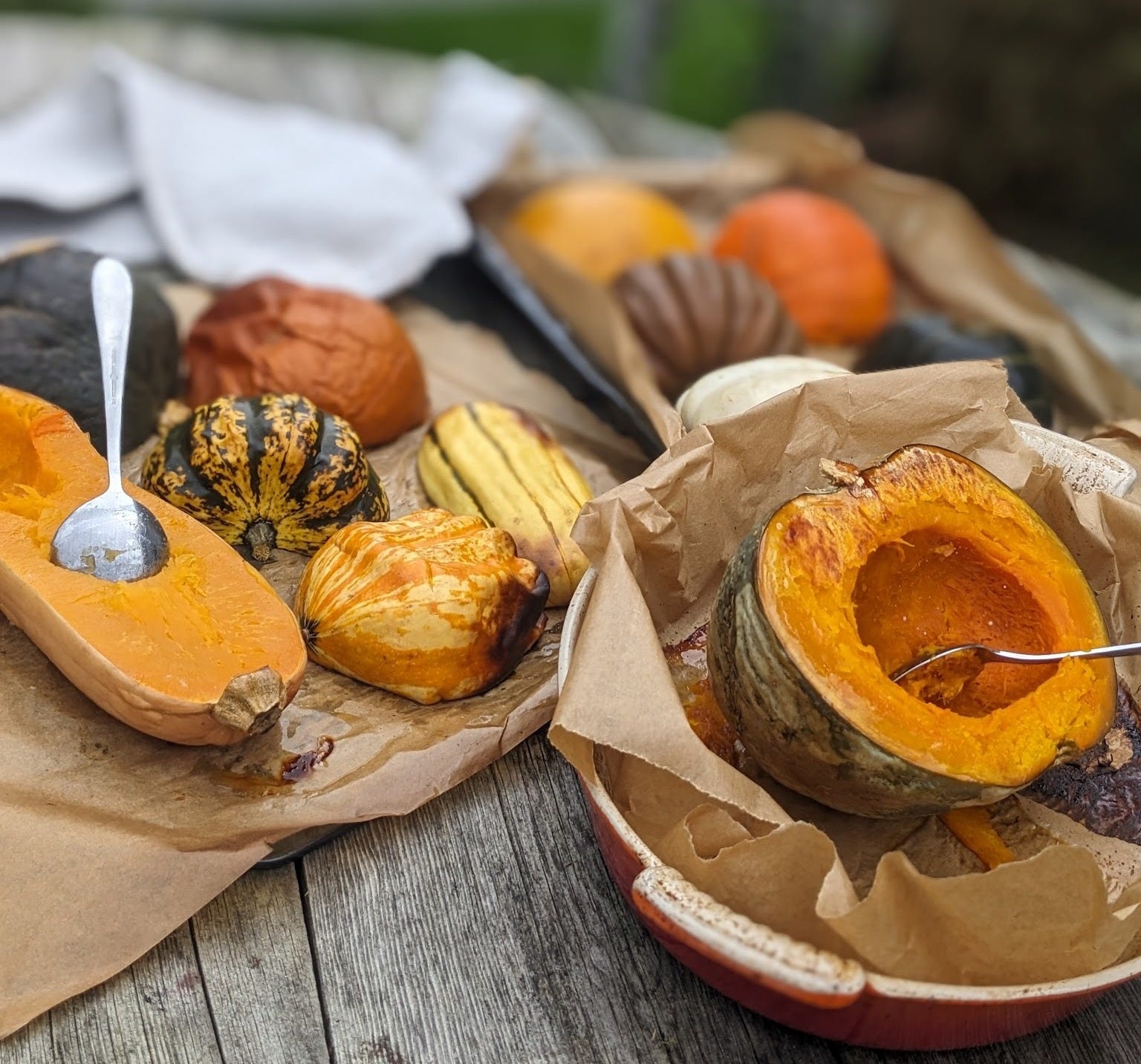
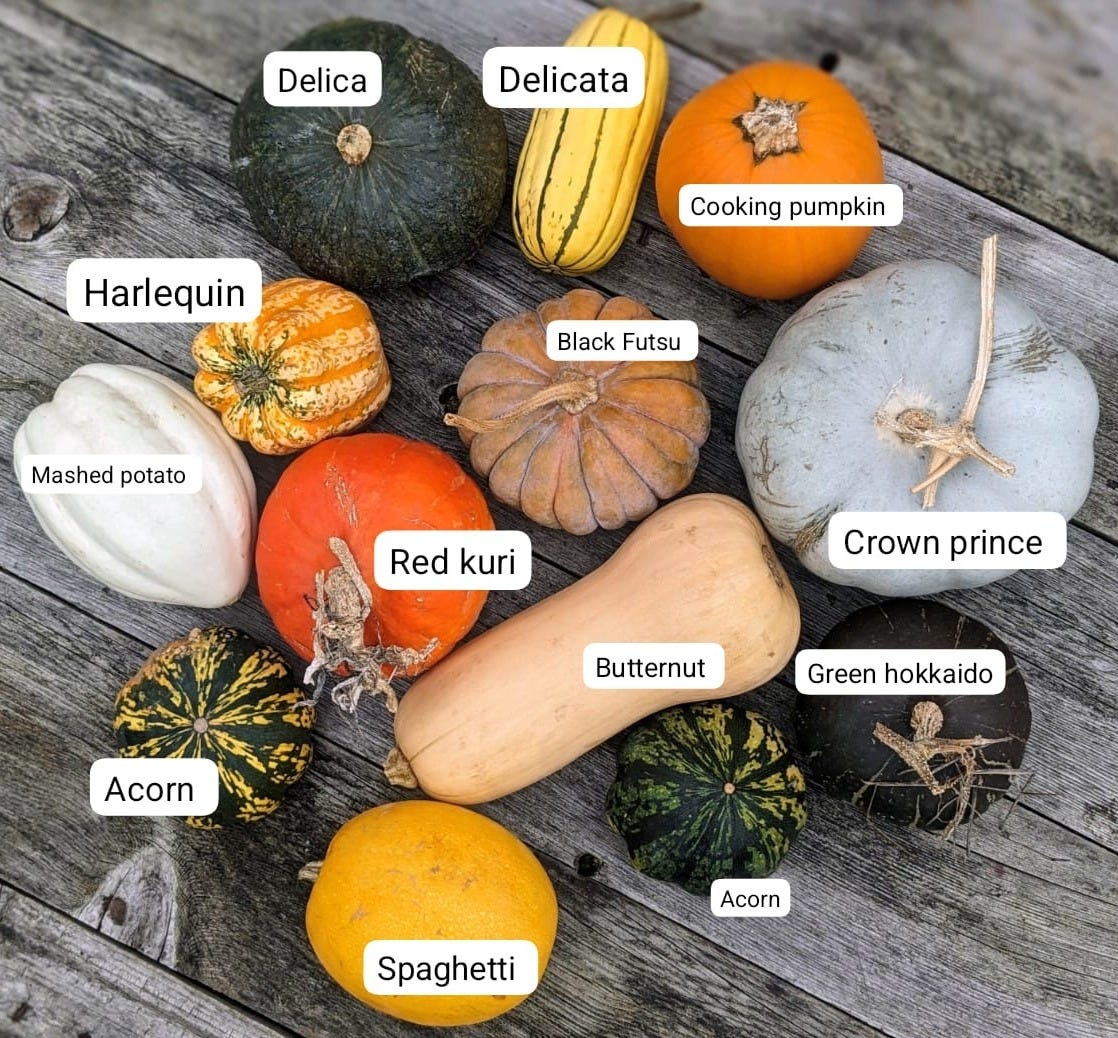
Here’s some of the most readily available varieties, and what to expect when you’re cooking with them. It’s worth noting that ALL of these squash (except the dreaded cooking pumpkin IMO) are delicious roasted, and ALL of them can be enjoyed with their skins on- peeling optional.
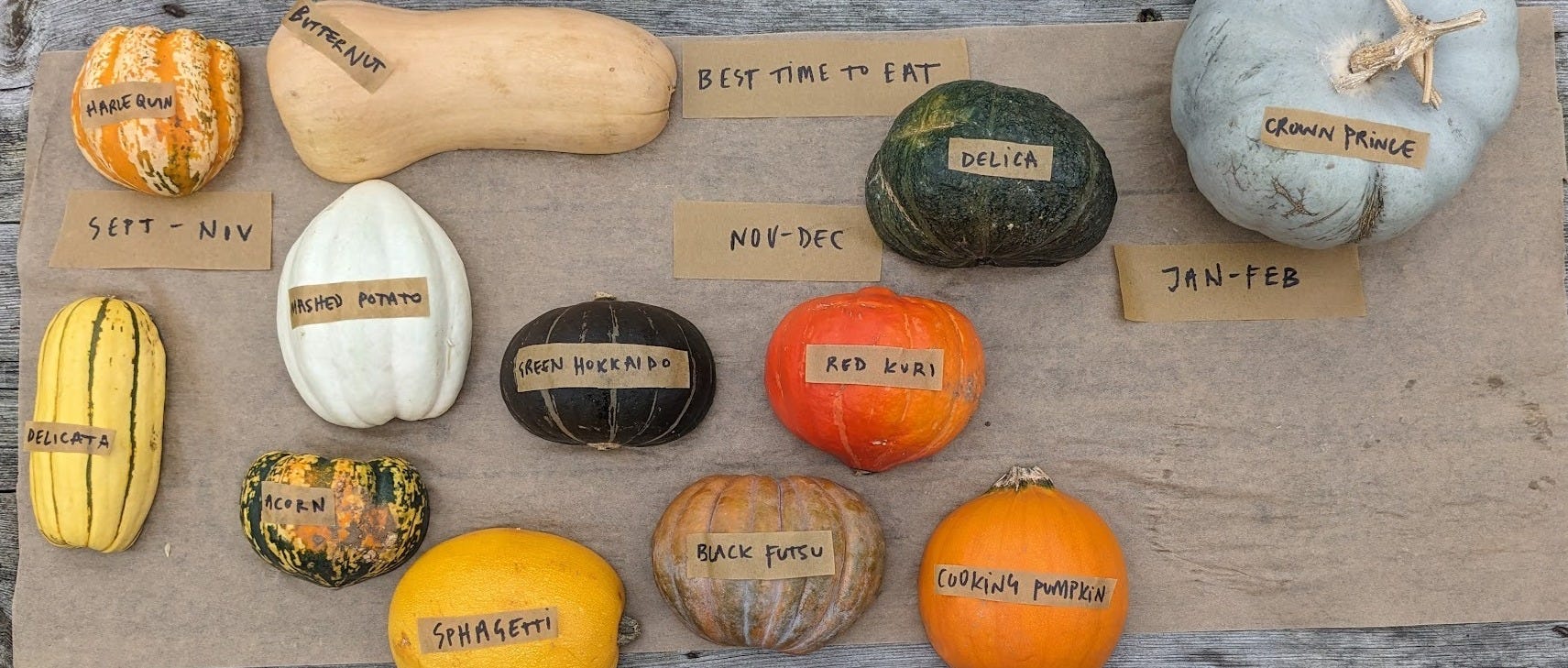
A Rough Squash Calendar
Winter squash is sown in the spring - the fruit swells with the heat and sunlight of the summer, and ripens into the early autumn when it’s harvested. Some squash love to be eaten straight away, but others really benefit from weeks or months of curing. Harvested and stored correctly, this curing process converts starch into sugar, bringing out the squash’s natural sweetness. This means that some varieties might taste a bit bland in October, but really come into their own in January - a fact which is completely overlooked by supermarkets.
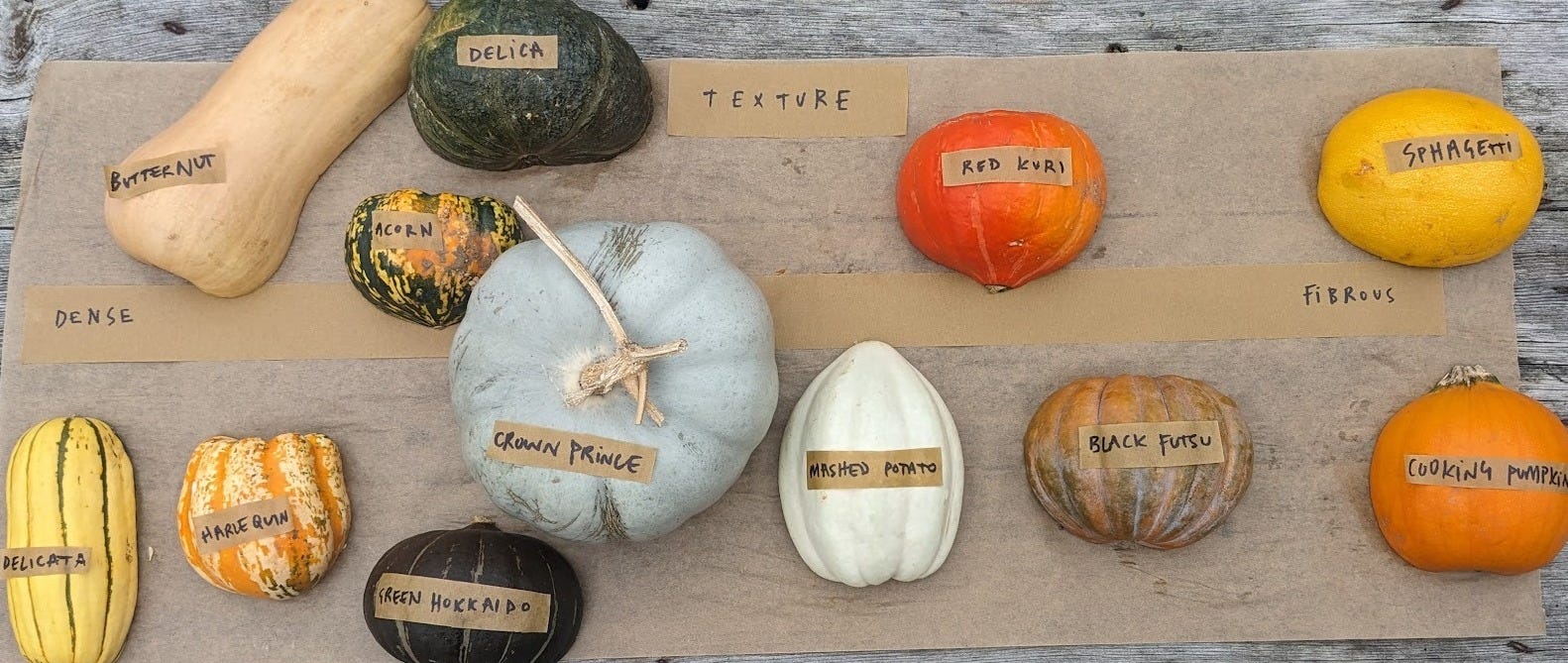
Texture Scale
From dense (waxier mouthfeel, lower water content) to fibrous (stringier consistency with higher water content). Denser squash are great all rounders- and tend to be great for things like frying or braising, as well as shaved thinly and eaten raw. At the more fibrous end, I’d suggest a good roasting before adding to your dish, to draw out the excess water and concentrate their flavour.
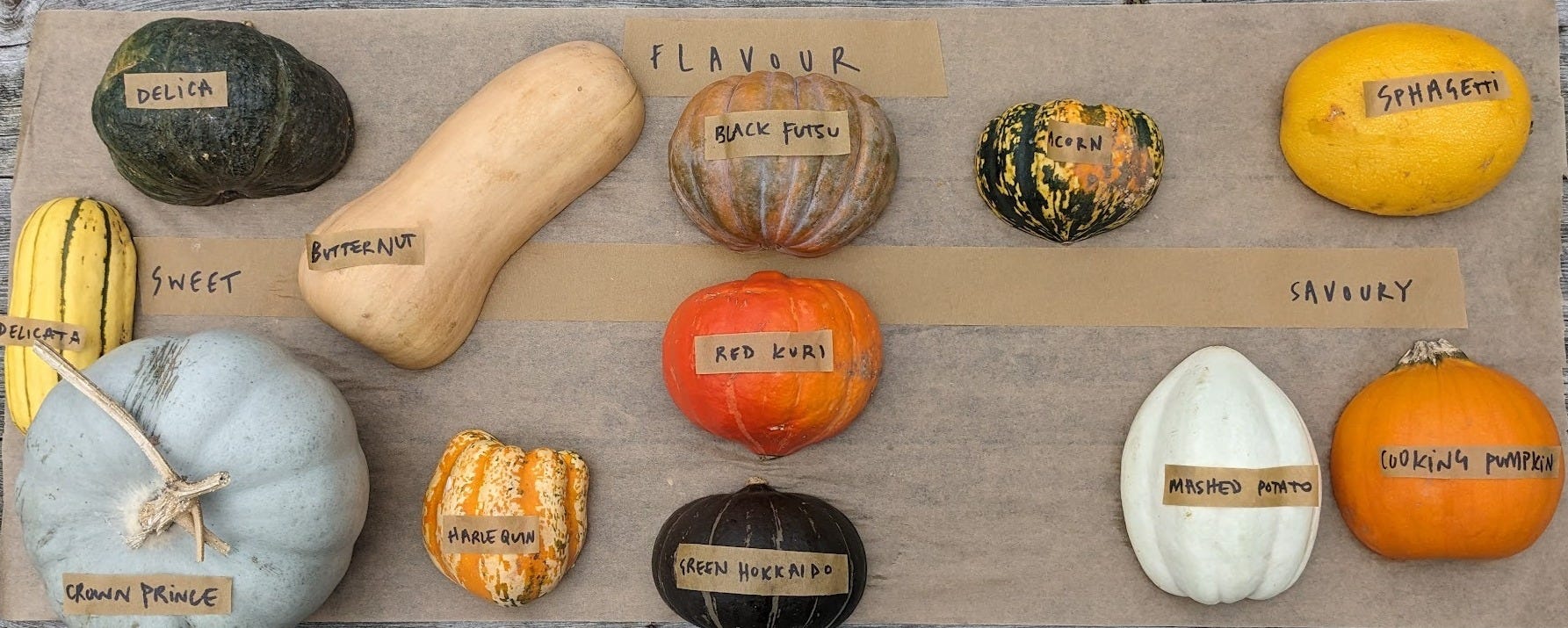
Flavour Scale
From sweet to savoury! Delicata and Delica Squash are astonishingly sweet and taste like popcorn and honey. I will admit, getting your hands on a Delica pumpkin isn’t easy or cheap- but if you see one, snap it up! Your tastebuds will thank you. The squash on the savoury end really have a more pronounced nutty flavour, and so pair really well with butter or cheese. Mashed potato squash, roasted and then mashed with some butter really is a treat.
My advice? At risk of sounding like a broken record, if your budget and time allows, get your squash from your local market garden. They’ll often grow really delicious varieties, will be more than happy to talk you through what’s what, and will only sell them when they’re ready to be eaten. Next best thing- try to identify what’s in those mixed supermarket bins, so you can know what to expect in the kitchen.
Now we’ve got the basics out of the way- we can get on with cooking! The rest of this series is going to consist of recipes; all of them simple, all of them delicious. Stay tuned, and happy squash hunting!
And this is super helpful, I usually just get my squash like a lucky dip in the supermarket. This has made me realise I love an acorn!
I can't wait for the recipes! I have a feeling I'm going to be having lots of squash in these next few months😍